The Tramway du Mont-Blanc — An epic story spanning more than a century
A century at altitude, an exceptional line.
For more than 120 years, the Tramway du Mont-Blanc has tirelessly climbed the flanks of the massif, carrying with it the dreams of mountaineers, the wonder of families and the ambition of a whole region. Born from an audacious idea — reaching the roof of Europe by rail — the TMB is today far more than a means of transport: it is a living symbol of Alpine history, constantly reinvented for generations to come.
The origins: dreams of climbing Mont-Blanc (1835–1904)
As early as 1835, visionary engineers imagined an underground funicular beneath the glaciers to reach the summit of Mont-Blanc. The dream was considered unrealistic, but it revealed a long-standing fascination with the high mountains and the idea of reaching them mechanically.
At the end of the 19th century, the European enthusiasm for rack railways reached Savoy. The success of Swiss projects — such as the famous Vitznau-Rigi railway, opened in 1873 — deeply inspired local engineers. Between 1890 and 1902, several competing projects emerged, notably one at Les Houches (1896) and one at Saint-Gervais led by engineer Henri Duportal.
In 1904, the General Council of Haute-Savoie officially approved the Duportal project, paving the way for the construction of an ambitious railway. The Compagnie du Tramway du Mont-Blanc was officially founded.
Conquering the massif: construction and the first journeys (1906–1914)
Work began in 1906 with an immense ambition: to carry travellers all the way to the summit of Mont-Blanc on an entirely open-air line, passing via the Aiguille du Goûter. But technical challenges, costs and extreme high-mountain conditions considerably slowed the project.
The major milestones of this conquest:
1909 — Opening at Col de Voza
Inauguration of the first section as far as Col de Voza (1,657 m), the official opening of the TMB to the public.
1911 — The line reaches Mont Lachat
The line continues to climb in elevation and reaches Mont Lachat (2,115 m). The construction project, carried out under extreme conditions, mobilizes hundreds of workers—mostly Italians—who brave snow, avalanches, and steep terrain to extend the track ever higher up the slopes of the mountain range.
Click on the images to enlarge them
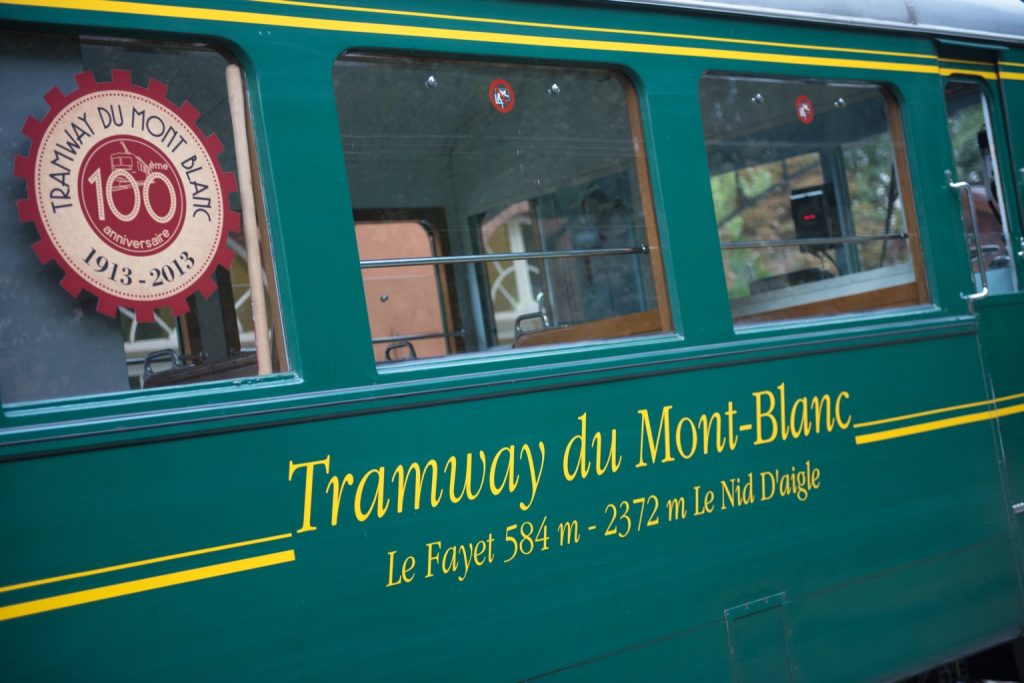
1913 — Terminus at Nid d’Aigle
The train reaches its terminus at Nid d’Aigle (2,372 m), the preferred starting point for the Tête Rousse and Goûter refuges.
Click on the images to enlarge them
1914 — The End of the Dream at the Summit
The ambition to extend the line to the summit of Mont Blanc came to a definitive end in 1914 with the outbreak of World War I. The dream of a train reaching the roof of Europe would never come to fruition, but the TMB was now firmly established in the Alpine landscape, ready to write a century of history.
The TMB, a historic ally of mountaineers
From its opening, the Tramway du Mont-Blanc became an essential tool for mountaineers taking the Voie Royale to the Goûter refuge and the normal route up Mont-Blanc. This role has never wavered: even today, 75% of mountaineers taking this route use the TMB.
But the train’s appeal extends well beyond the world of mountaineering. Hikers, families and tourists from all over the world board it to discover the exceptional views over the Bionnassay glacier, the surrounding peaks and the unique atmosphere of high-altitude railways.
Click on the images to enlarge them
1956 — Electrification and modernisation
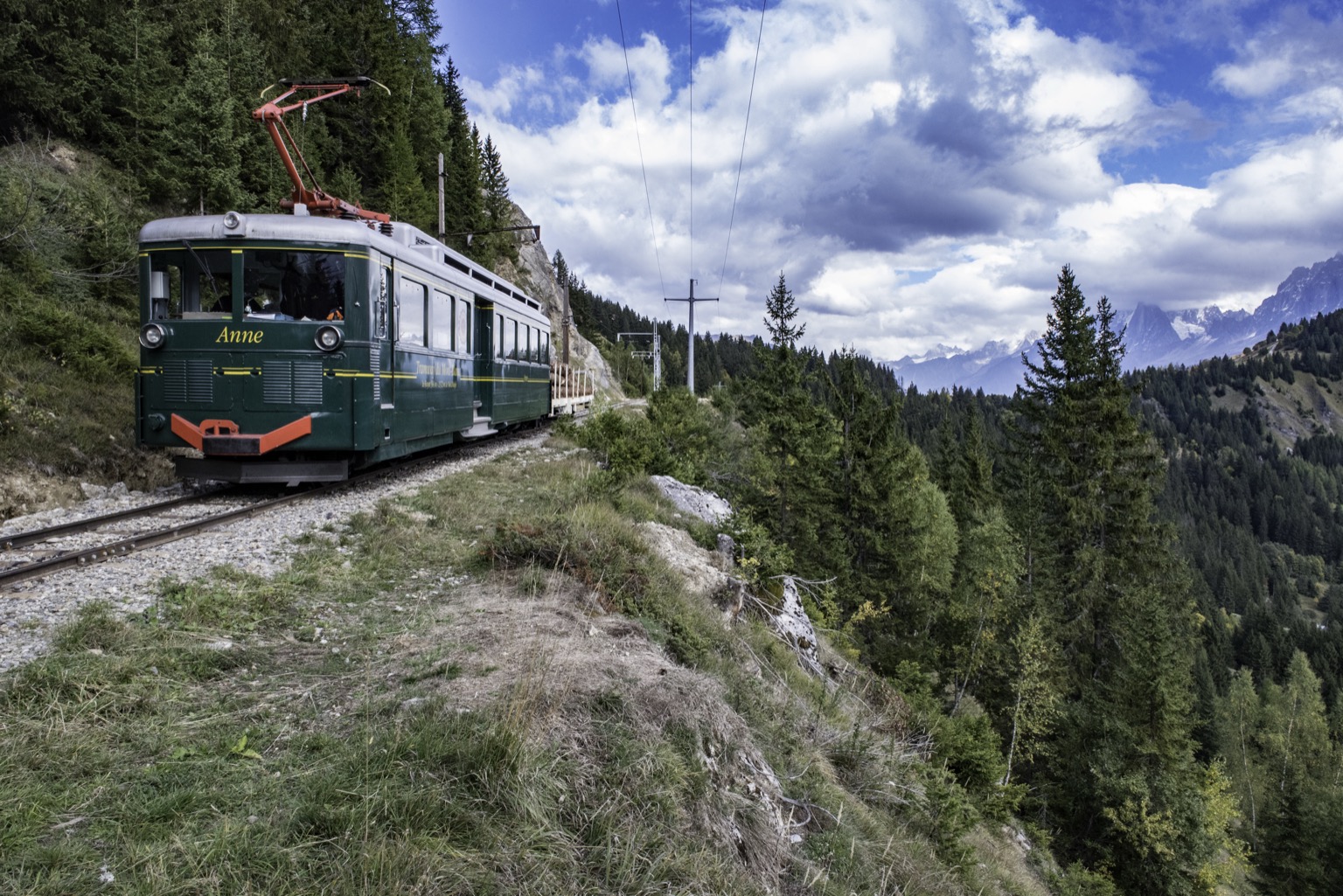
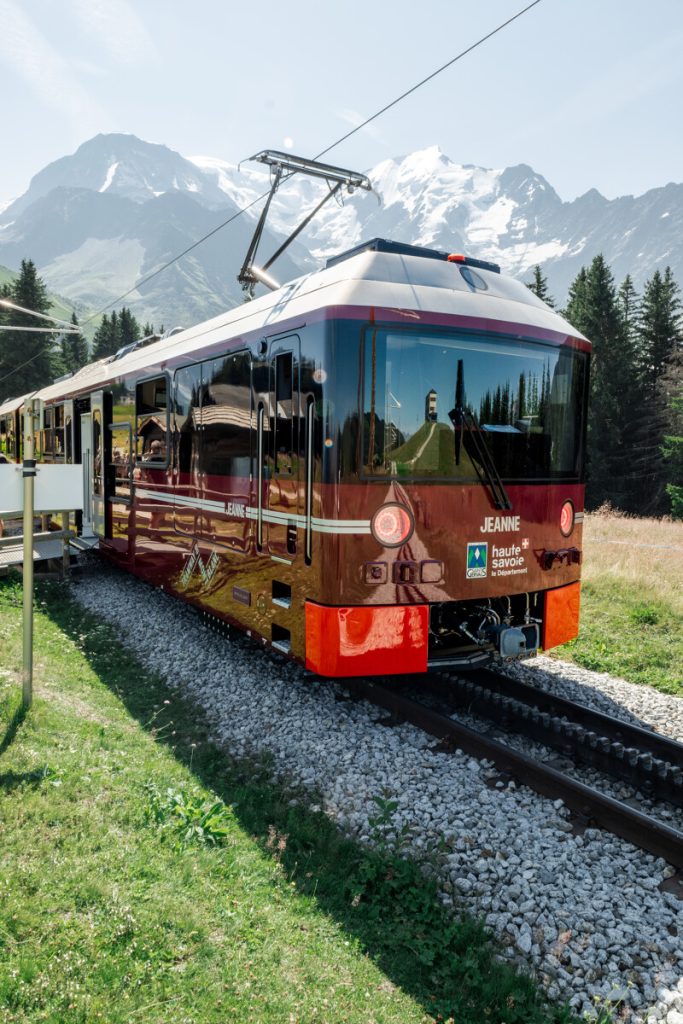
After decades of steam traction, the line was electrified in 1956. Three iconic railcars were then introduced: Anne (green), Jeanne (red) and Marie (blue). They became the undisputed stars of the TMB for more than half a century, and their image remained closely linked to the train’s identity.
Since 2000, the TMB has been operated by the Compagnie du Mont-Blanc, which also manages the Montenvers train and numerous cable cars across the massif.
Click on the images to enlarge them
Since 2020 — A new era for the 21st century
From 2020, the Haute-Savoie Department, the line’s historic owner, launched an unprecedented investment plan to thoroughly modernise the TMB.
Beyond the renewal of the rolling stock, the Department is investing €70 million over 15 years in major TMB projects: renovation of Saint-Gervais station, reconstruction of the Le Fayet maintenance workshops, creation of a station at Le Fayet, and development of the Nid d’Aigle site.
Click on the images to enlarge them
2022-2023 — New trainsets Stadler
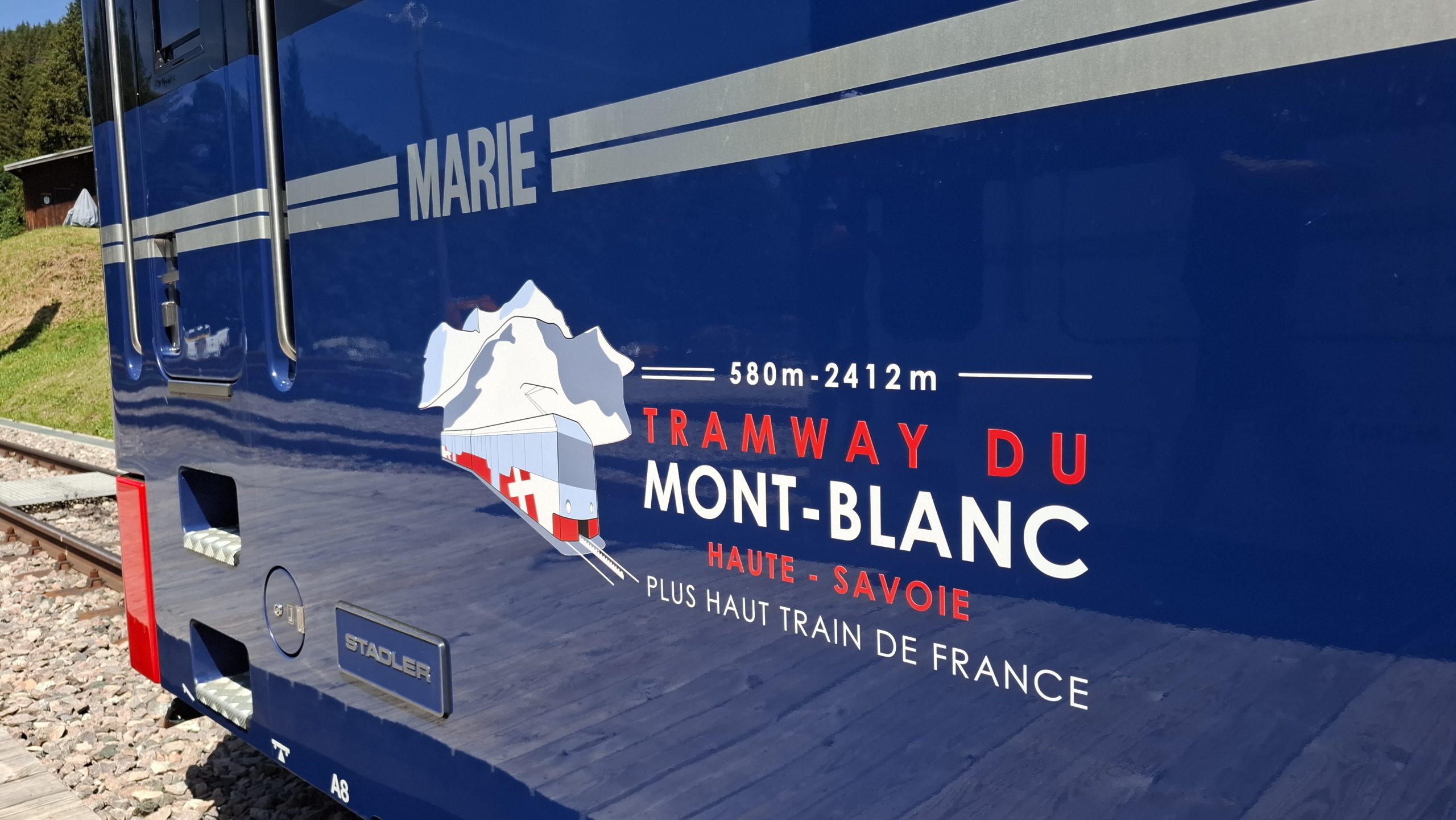
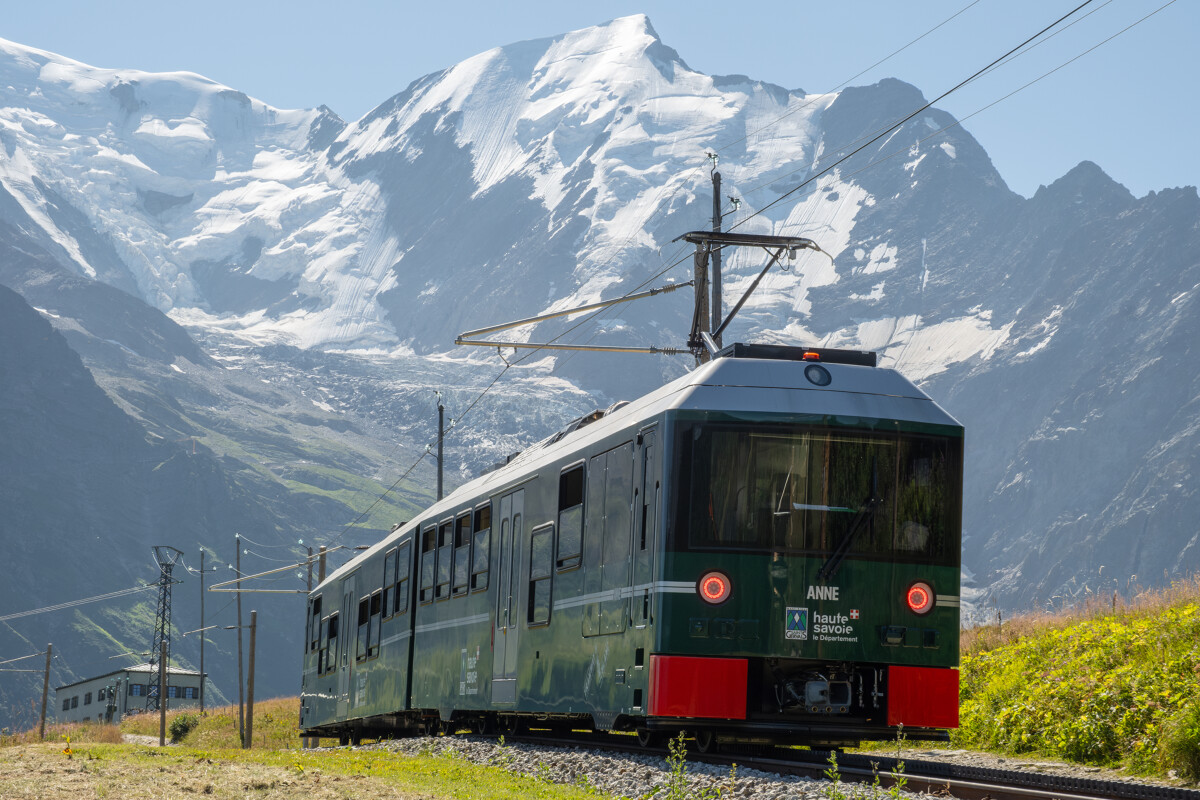
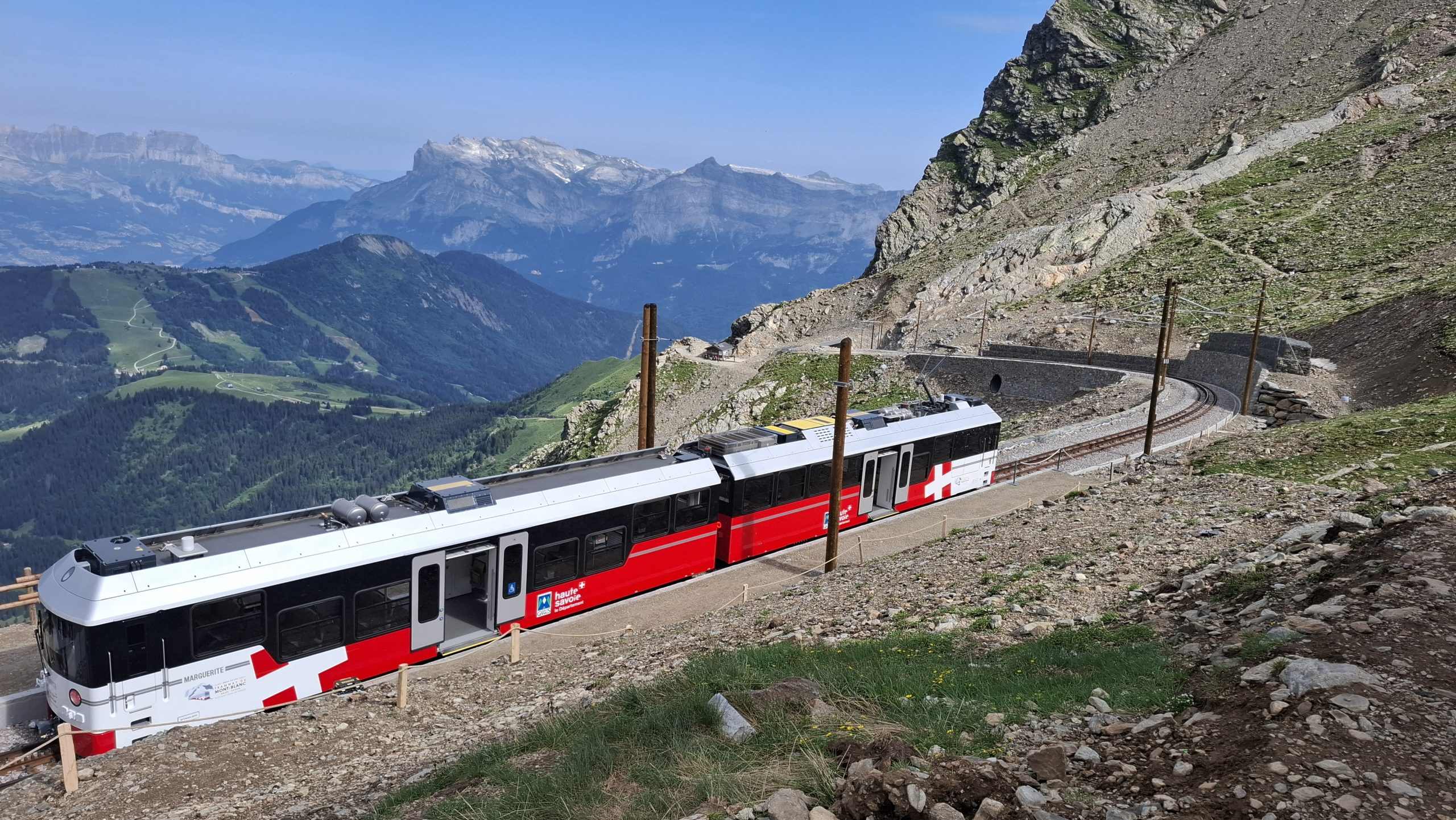
In 2022–2023, four modern trainsets built by the Swiss manufacturer Stadler entered service. Named Marie, Jeanne, Anne and Marguerite — in tribute to the daughters of Pierre Nourry, the industrialist behind the line’s electrification — they are 32 metres long, can carry up to 200 passengers and reach a speed of 20 km/h.
Comfort, safety and accessibility for people with reduced mobility are all part of the package.
2025 — The completion of a historic project
In 2025, a new page of history was turned: the Tramway du Mont-Blanc finally gained a true arrival platform at its Nid d’Aigle terminus, at an altitude of 2,400 metres. These final 300 or so metres of track, halted by the war in 1913, were finally completed more than a century later.
This project also includes the construction of a rockfall protection gallery to protect passengers, and reduces the access slope to a flat access point, a major step forward for accessibility. In total, between the renewal of the rolling stock, the extension of the track and the developments planned through to 2028, €120 million of public money will have been invested in this unique railway heritage.
A unique cultural and tourist heritage
The Tramway du Mont-Blanc goes far beyond its role as a means of transport. It is deeply rooted in the identity of Saint-Gervais and in the mountain imagination: it appears in films, exhibitions, postcards and mountaineering accounts of every era. Its Strub-type rack system, its 12.4 km of track and its 1,800 m of elevation gain make it as much a technical feat as a cultural symbol.
The line today serves several legendary stations: Le Fayet, Saint-Gervais-les-Bains, Motivon, Col de Voza, Bellevue (winter terminus) and Nid d’Aigle (summer only).
Between heritage, nature and adventure, the TMB remains one of the major tourist gems of Haute-Savoie — and one of the most beautiful ways to approach the roof of Europe.
2026 — The story continues
At the end of 2025, the Haute-Savoie Department, as the delegating authority, decided to end the current concession contract.
From June 2026, an entirely new chapter opens for this legendary train: the Department is taking direct control of its operation, through the Régie départementale du Tramway du Mont-Blanc,
This body is responsible for overseeing every aspect of the public service: commercial and technical operations, maintenance of facilities, relations with passengers, as well as the planning and implementation of the investments needed to develop the line.
A jewel of mountain tourism
For the Department, this direct management approach represents far more than a simple administrative change: it is an opportunity to complete the projects under way, to sustainably modernise this emblematic facility, and to renew the bond with the people of Haute-Savoie, for whom the highest rack railway line in France — with nearly 200,000 journeys a year — represents a living heritage.
The ambition is clear: to make the Tramway du Mont-Blanc a flagship of mountain tourism, proudly carried forward by its region.